Overview
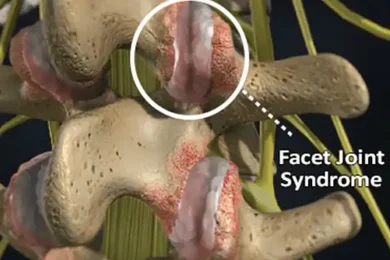
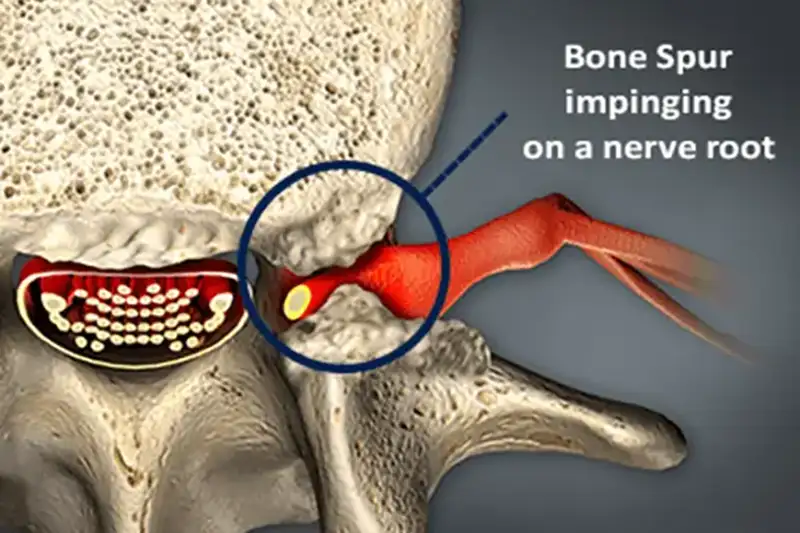
Bone spurs are a commonly develop on the human body due to wear and tear. These body growths are not always problematic, however, when bone spurs form on the facet joints in the spine, they can press against spinal nerves and other soft tissues, leading to pain and numbness in various parts of the body. The pain will vary based on the location of the spurs; lumbar osteophytes may cause lumbar radiculopathy which affects the lower extremities while cervical osteophytes (bone spurs in neck) may cause cervical radiculopathy which affects the upper extremities.
What are Bone Spurs or Osteophytes?
Bone spurs are an enlargement of the normal bone structure. The boney structure is often smooth and forms over a prolonged period of time on the edges of the bones near the joints. They can affect nerves, tendons, ligaments and other tissues. Some common places where bone spurs can develop include the spine, shoulders, hands, hips, knees, and feet. Osteophytes can be an indication that there is increased pressure on the joints of the spine.
Bone spurs are small enlargements of bone structure. This enlarged boney structure is often smooth and forms over a period of time on the edges of the bones near the joints. Bone spurs can be asymptomatic, but depending on their location they can result in debilitating pain.
Causes of Bone Spurs
The causes of bone spurs are often a reaction to changes in your joints due to diseases and/or aging, most commonly osteoarthritis. When bone is damaged, the bone cells sometimes overcompensate by creating extra bone.
Aging, arthritis and ligament issues are the most common bone spurs causes. A bone spur, also known as osteophyte, is just extra bone. When a cartilage in your body breaks down, a bone spur occurs as a result of your body attempting to repair the damage. This is why new bone is created around the edges of existing bones.
A bone spur is, in essence, a small outgrowth of the bone. They tend to form where bones meet each other, as well as on the bones of your spine. Several causes can lead to a bone spur, but they are often associated with your body’s response to cartilage break down.
As osteoarthritis breaks down the cartilage in the joints of the spine, your body attempts to repair the loss. In many cases, this means creating new areas of bone along the edges of your existing bones.
Primarily, bone spurs occur due to continued rubbing or stress of a bone. Another common cause of bone spurs is osteoarthritis or tendonitis. Bone spurs occur whenever a cartilage gets worn away, and the bones next to it begin rubbing directly against each other.
Other conditions are also associated with bone spurs. Some of these conditions include plantar fasciitis, which causes inflammation of the connective tissue on the bottom of the foot, exactly where it attaches to the heel bone. Other conditions include ankylosing spondylitis and diffuse idiopathic skeletal hyperostosis (DISH), which are both inflammatory conditions that affect the ligaments causing bone spurs in the spine.
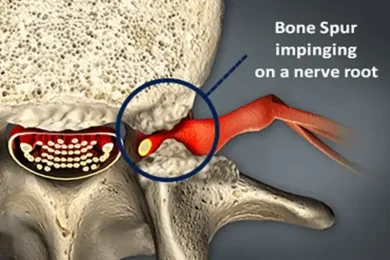
Your body may also create bone spurs in an attempt to add stability to the spine. Bone spur formation is the body’s attempt to increase the surface area of a joint to better distribute weight across a joint surface that has been damaged by arthritis or other conditions. Unfortunately, this can become a largely wasted effort by the body, as the bone spur itself can become restrictive, impinge on a nerve, other soft tissues, and cause spinal stenosis.
Some spinal conditions that may lead to bone spurs include:
Bone spurs may also develop after a traumatic injury or due to a person’s lifestyle. For example, if your job requires you to lift heavy objects or complete repetitive motions, the force put on your joints can increase the risk of developing osteophytes. Poor posture can also lead to the development of osteophytes.
Symptoms of Bone Spurs
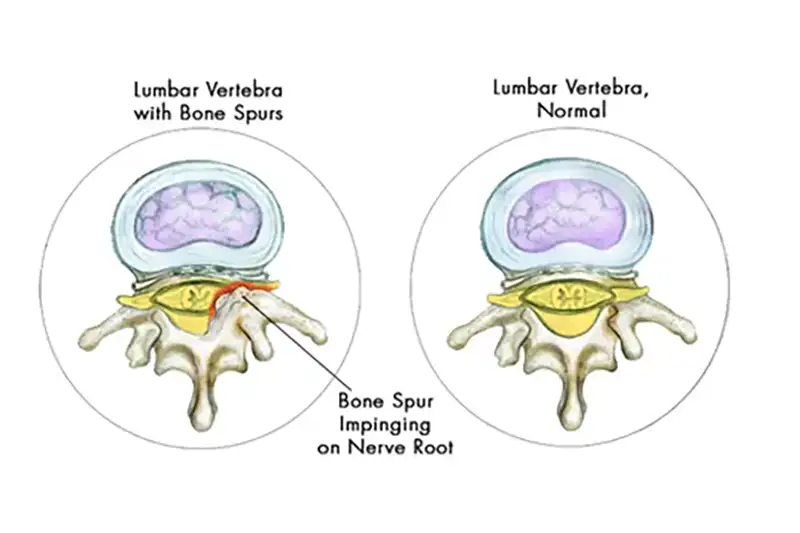
Bone spurs themselves are not painful. However, when they rub against nearby nerves or narrow the spaces between the vertebrae through which nerves pass, they can cause severe back pain.
Symptoms according to the location of the bone spur include:
- Knees – can cause pain when extending or bending the legs.
- Spine – can cause pain, numbness or weakness in arms or legs due to pinching of the spinal cord or the nerve roots.
- Hip – can cause pain and reduce the range of motion in the hip joint.
- Shoulders – can cause reduced shoulder movement, tears in the rotator cuff, and swelling.
- Fingers – can cause lumps under the skin.
By themselves, bone spurs are not painful. However, they can easily rub against nearby nerves or narrow the spaces between vertebrae, leading to nerve pinching and causing severe pain. Common bone spur symptoms will vary according to their location.
For instance, bone spurs that form on the vertebrae body in your spine may push against your spinal nerves, leading to pain and numbness in various parts of the body.
Bone spurs may go undetected for years and not require any treatment. Where your bone spurs are located determines where you will feel pain and whether you will experience any other signs or bone spur symptoms.
For instance, bone spurs that form on the vertebra body in your spine may push against your spinal nerves, leading to pain and numbness in various parts of the body.
Some of the clinical bone spurs symptoms patients may experience include:
- Dull pain when standing or walking
- Radiating pain into the extremities
The symptoms experienced are often made worse with activity, including bending over or leaning over. For cervical osteophytes, dysphagia may occur. For many, relief is only found when they rest.
As the bone spurs begin to impede on the nerves, the patient may experience pain, weakness, and numbness or tingling in the extremities.
Cervical Bone Spurs
If the bone spur develops on the vertebrae in the cervical spine, it can lead to pain and stiffness in the neck area. Common cervical bone spur symptoms include:
- Sharp or radiating pain in the neck, shoulders and arms
- Headaches
- Numbness or tingling
- Weakness that radiates into the arms and hands
Thoracic Bone Spurs
If the bone spur develops on one of the vertebrae situated in the thoracic spine, it may cause discomfort in the center of the back, right behind the rib cage. Common thoracic bone spur symptoms include:
- Pain that radiates into the abdomen
- Radiating pain into arms and shoulders
- Pain and discomfort in the lower extremities
Lumbar Bone Spurs
If the bone spurs develop in the lumbar or lower back region, it can lead to stiffness and pain. Common lumbar bone spur symptoms include:
- Sciatica
- Lower back pain
- Tingling or numbness in the lower back area
- Weakness in the hips, buttocks, legs, and feet
Bone Spur (Osteophyte) Surgery & Treatment Options
Surgery for bone spurs may be necessary when the bone spurs have become problematic by pinching the nerves as they exit the spinal canal. This condition may lead to pain, numbness, or weakness and restrict normal movement. Conservative treatment options such as anti-inflammatories, pain medications, physical therapy and cortisone injections are often the first treatment options, however these treatment options often provide some relief, but don’t usually solve the problem.
If a patient has been suffering from pain, numbness, or weakness due to a bone spur for more than three months and conservative treatment has failed to resolve the problem, then surgery is recommended for long-term relief.
Because bone spurs are often the outcome of other degenerative conditions, stress, or injuries, there are unavoidable. Keeping an active, healthy lifestyle and being in good physical conditions can help reduce the symptoms associated with bone spurs. Maintaining a healthy weight can help ease the burden on the joints, decreasing the development of bone spurs. This is particularly true in the knees and feet. If non-conservative bone spur treatments do not show improvements in your symptoms, surgical treatment may be required.
The Bonati Spine Institute encourages patients with bone spurs to contact us to request a no-obligation MRI review or discuss your conditions with our medical professionals. Find out why The Bonati Spine Procedures are considered to be among the world’s best solutions when it comes to advanced spinal surgery. Your pain from bone spurs can become a thing of the past.
Loose Bodies and Joint Locking
Bone spurs can also break off from the larger bone, becoming what doctors call “loose bodies.” Often, loose bone spurs will float in your joint or become embedded in the lining of the joint.
Loose bodies can drift into the areas in between the bones that make up your joint, getting in the way and causing intermittent locking — a sensation that something is preventing you from moving your joint. Joint locking can come and go as the loose bodies move into and out of the way of your joint.
Conservative bone spurs treatment may provide temporary pain relief, however, surgery is the best way to remove bone spurs and decompress the affected nerves.
Resection of Osteophytes (Bone Spurs)
Resection of osteophytes is a procedure performed to remove bone spurs that are pinching the nerves. This procedure is often performed as part of a laminectomy. The surgery is designed to relieve pressure (decompress) on the spinal cord or spinal nerve roots through the widening of the spinal canal. The procedure is carried out by removing or trimming part of the lamina (roof) of the vertebrae in the compressed area. The removal of part of the lamina creates an opening for the compressed nerves, relieving pressure on the nerve roots and reducing inflammation. The partial removal of the lamina may also allow the surgeon to remove any bone spurs or damaged tissue causing pain and inflammation in the patient.
The Bonati Spine Institute encourages patients with bone spurs to contact us to request a no-obligation MRI review or discuss your conditions with our medical professionals. Find out why The Bonati Spine Procedures are considered to be among the world’s best solutions when it comes to advanced spine surgery. Your pain from bone spurs can become a thing of the past.
Advantages of the Bonati Spine Procedures
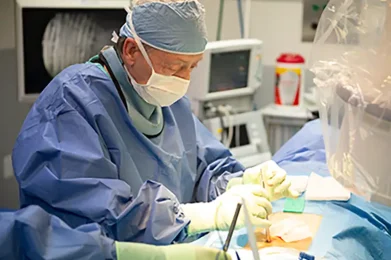
- The Bonati Spine Procedures are performed under local anesthesia and conscious IV sedation. Therefore, the patients remain awake, aware and alert during the procedure, which allows for direct communication with the surgeon as the pain is alleviated.
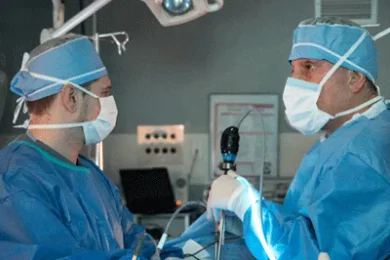
- The Bonati Spine Procedures are performed through a small incision. Therefore, they are less likely to cause significant scar tissue or blood loss, while maintaining the spine’s mobility.
- The Bonati Spine Procedures are gentle enough to be performed on an outpatient basis. Overnight hospitalization is not required after these procedures, which dramatically reduces recovery time and medical cost.
- Unlike old-fashioned “open” spine surgery, dissection of the muscles and removal of large sections of bone are avoided. Patients experience far less pain and trauma and a faster return to normal activities.
- Avoiding general anesthesia allows us to treat a greater range of patients including those with pre-existing conditions who would otherwise not be cleared to undergo spinal surgery.
- The Bonati Spine Procedures allow for fast return to work. The lasting effect of these procedures enables patients to return to their normal activities within days and to enjoy their life without pain.